DETOUR
What is
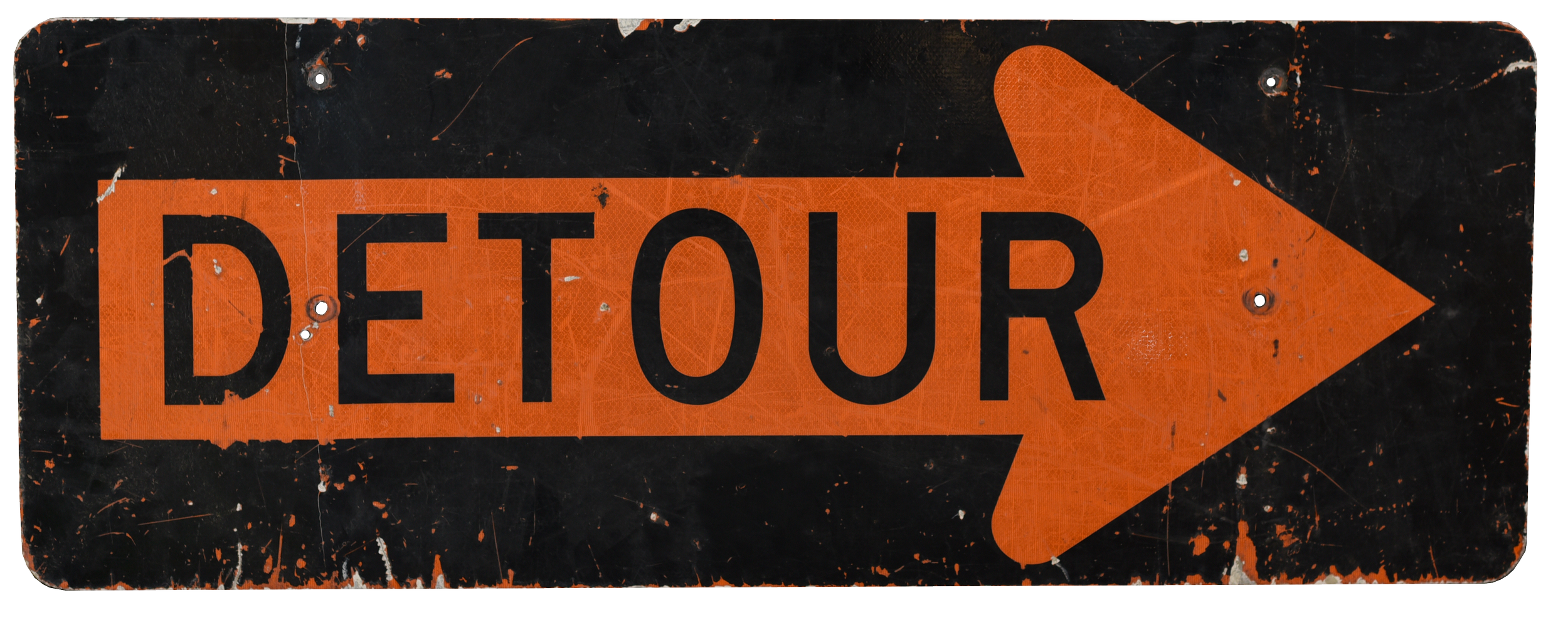
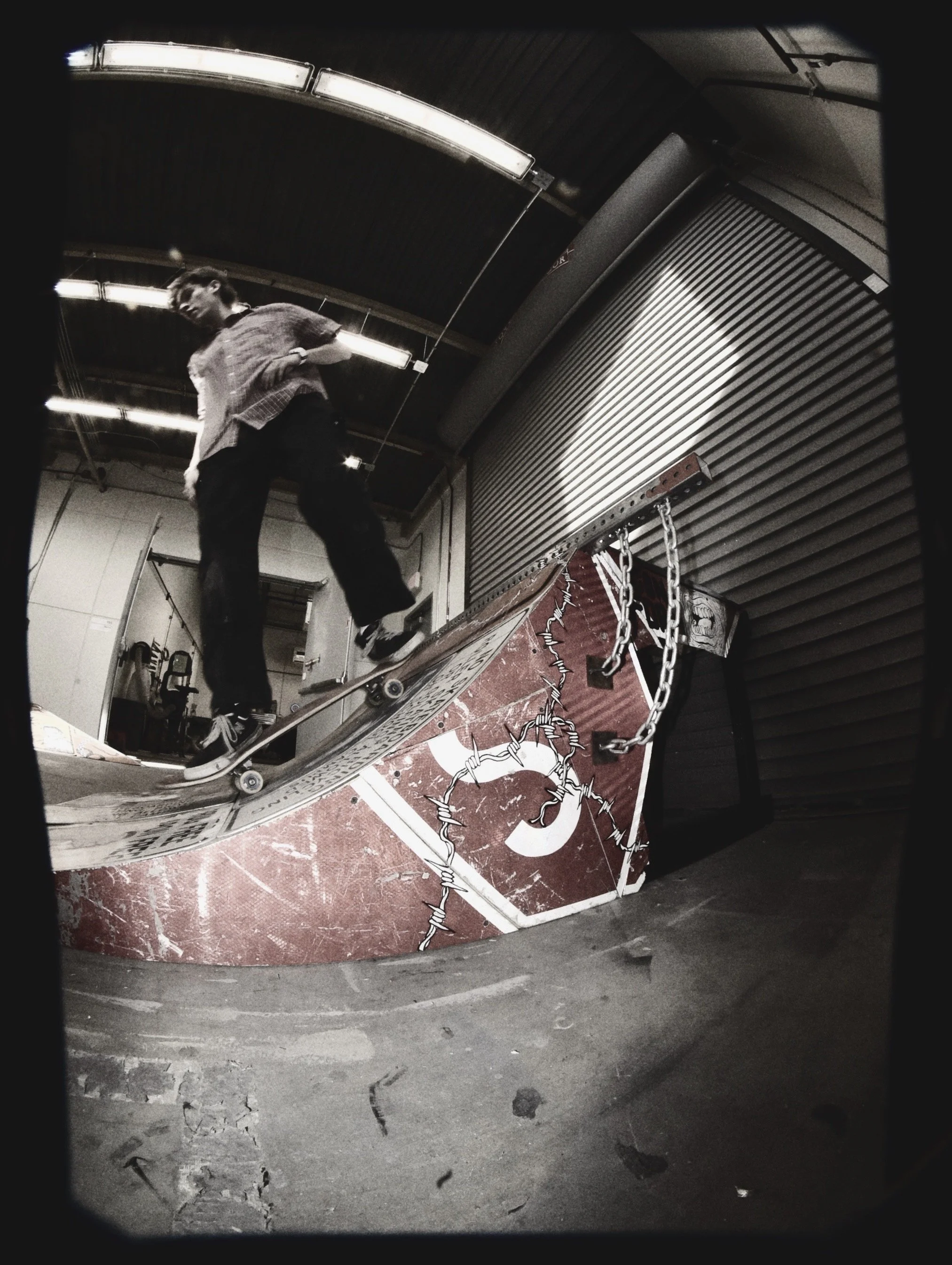
DETOUR brings skateboarding into the gallery and fine art space through a series of skateable sculptures. These works are built from materials associated with control and restriction—street signs, spiked steel, industrial metal, and fence wire. These material choices are intentional. They come from the language of the city: objects meant to direct movement, enforce behavior, and limit access. In this project, those same materials are transformed into sculptures that invite interaction, creativity, and risk.
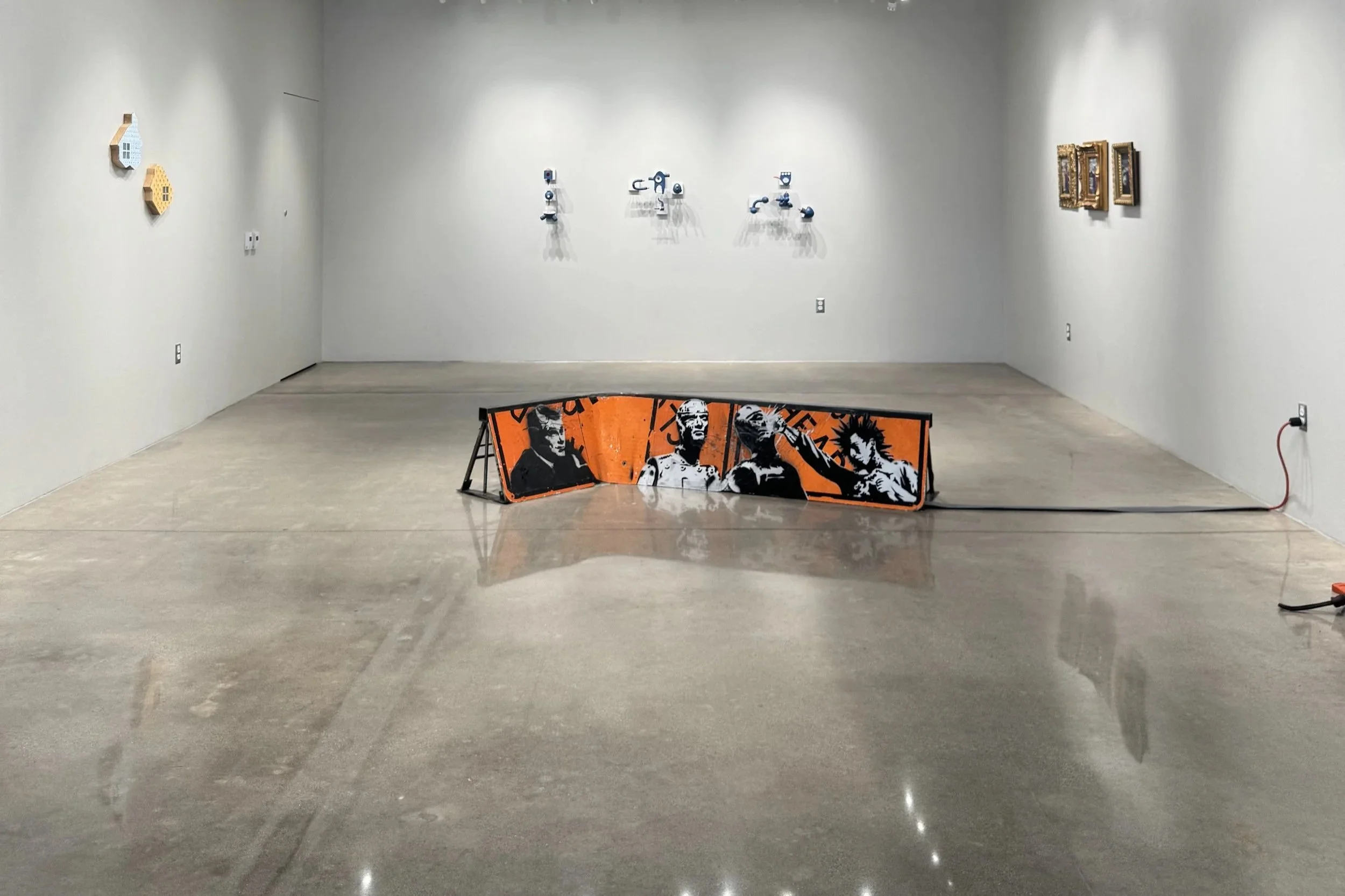
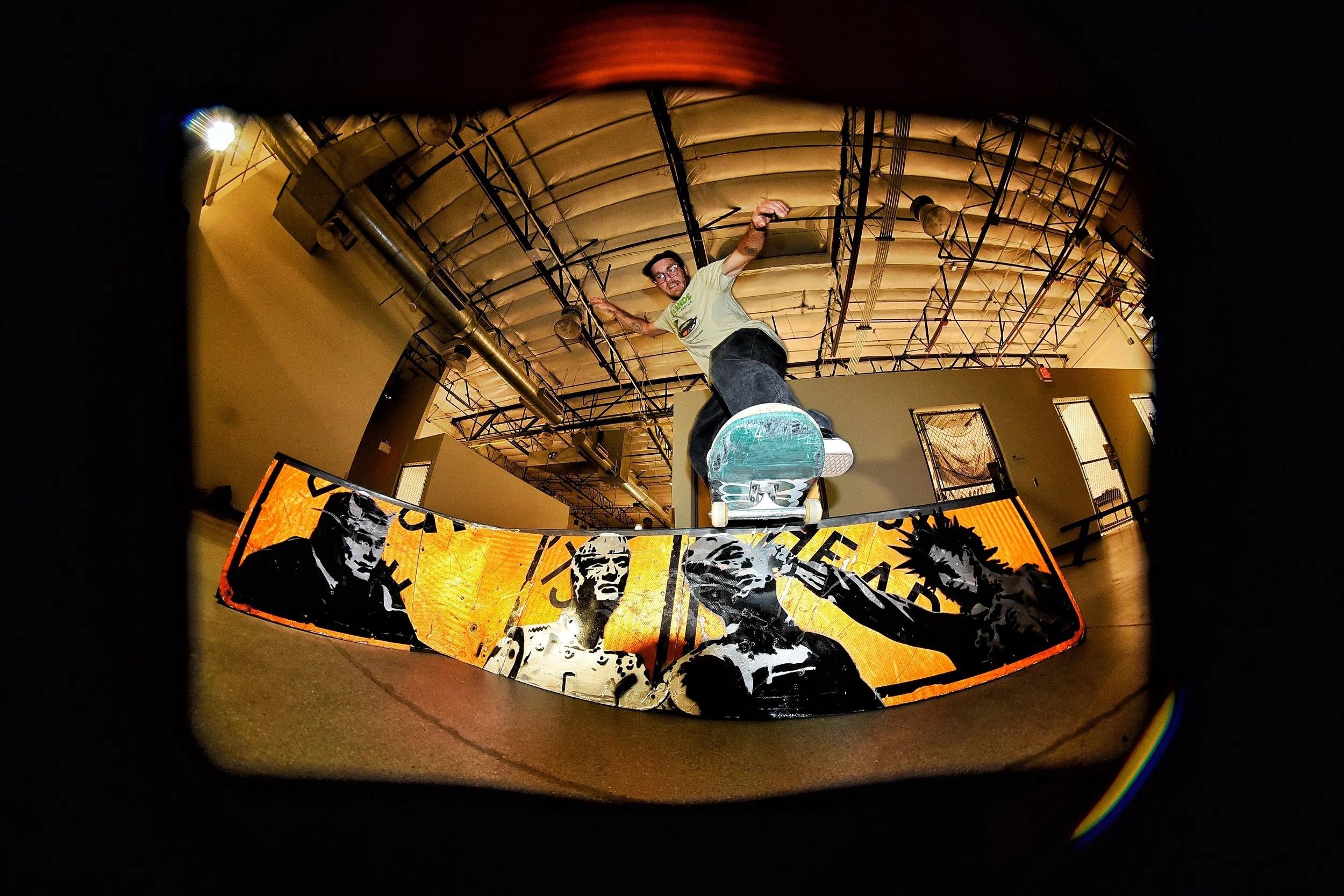
The curved rail, titled DETOUR, became the starting point for the project. A typical skate rail is straight, but adding a curve introduces both challenge and possibility. Instead of simply moving forward, the skater must adjust, lean, and adapt their balance to follow the bend. The piece turns an object of instruction and enforcement into something open-ended and expressive. That gesture is central to the project: taking materials and structures used by cities as passive or literal forms of control and reshaping them into objects for play, performance, and artistic exploration.
This idea connects directly to skateboarding itself. Skateboarding has always reimagined the built environment, turning barriers, rails, ledges, and obstacles into opportunities for movement and invention. DETOUR extends that logic into sculpture, using the gallery as a place where control can be challenged and redirected.
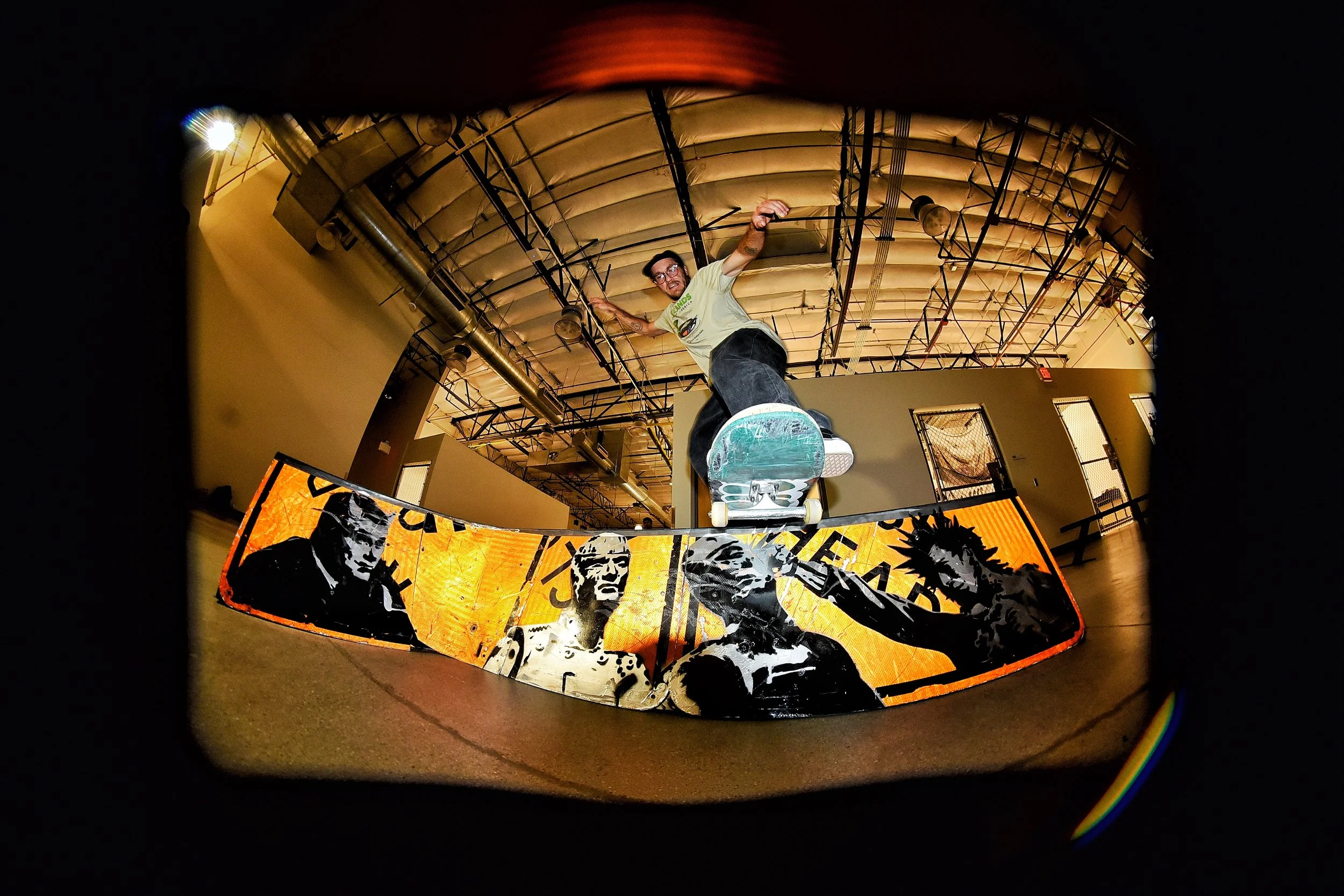
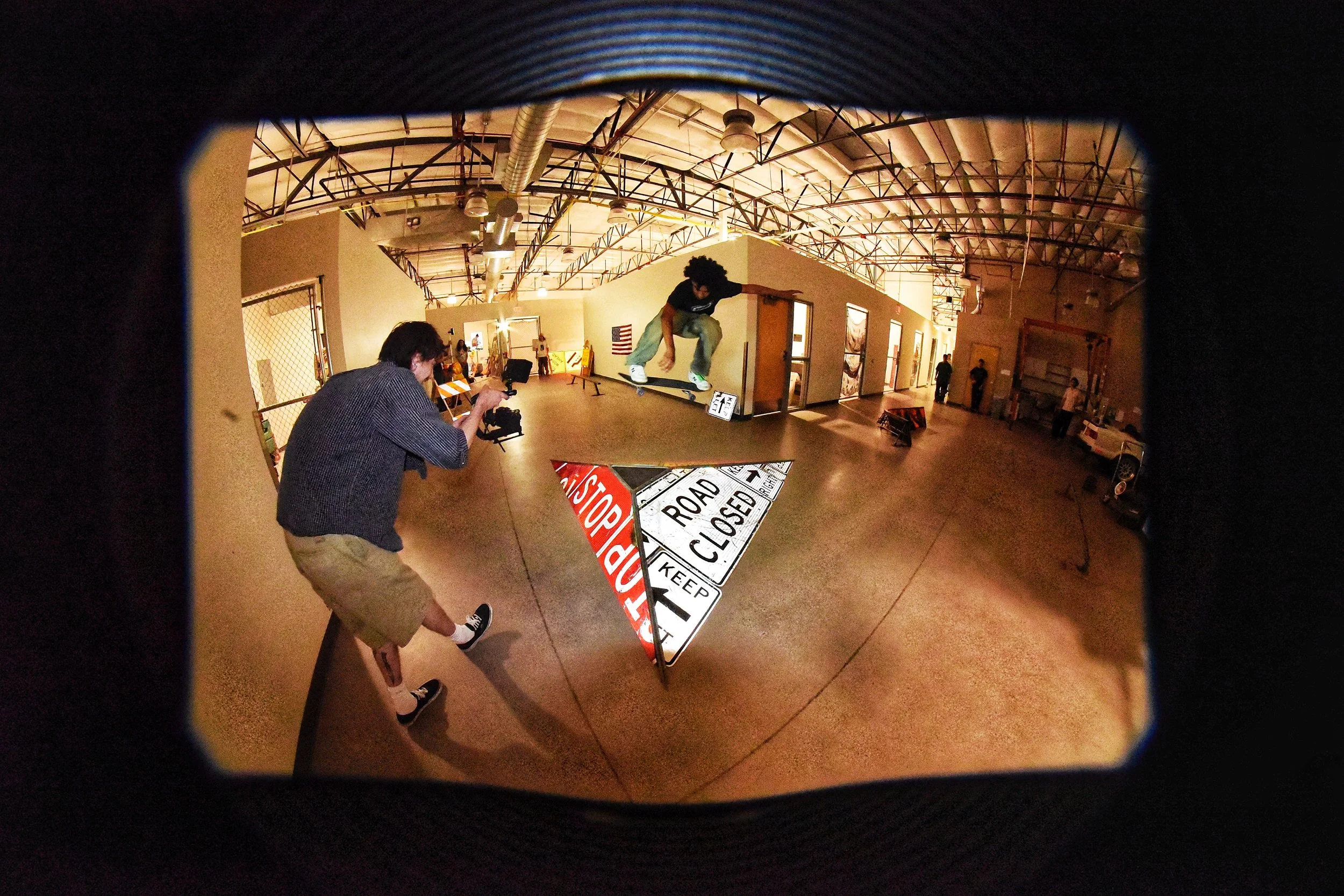
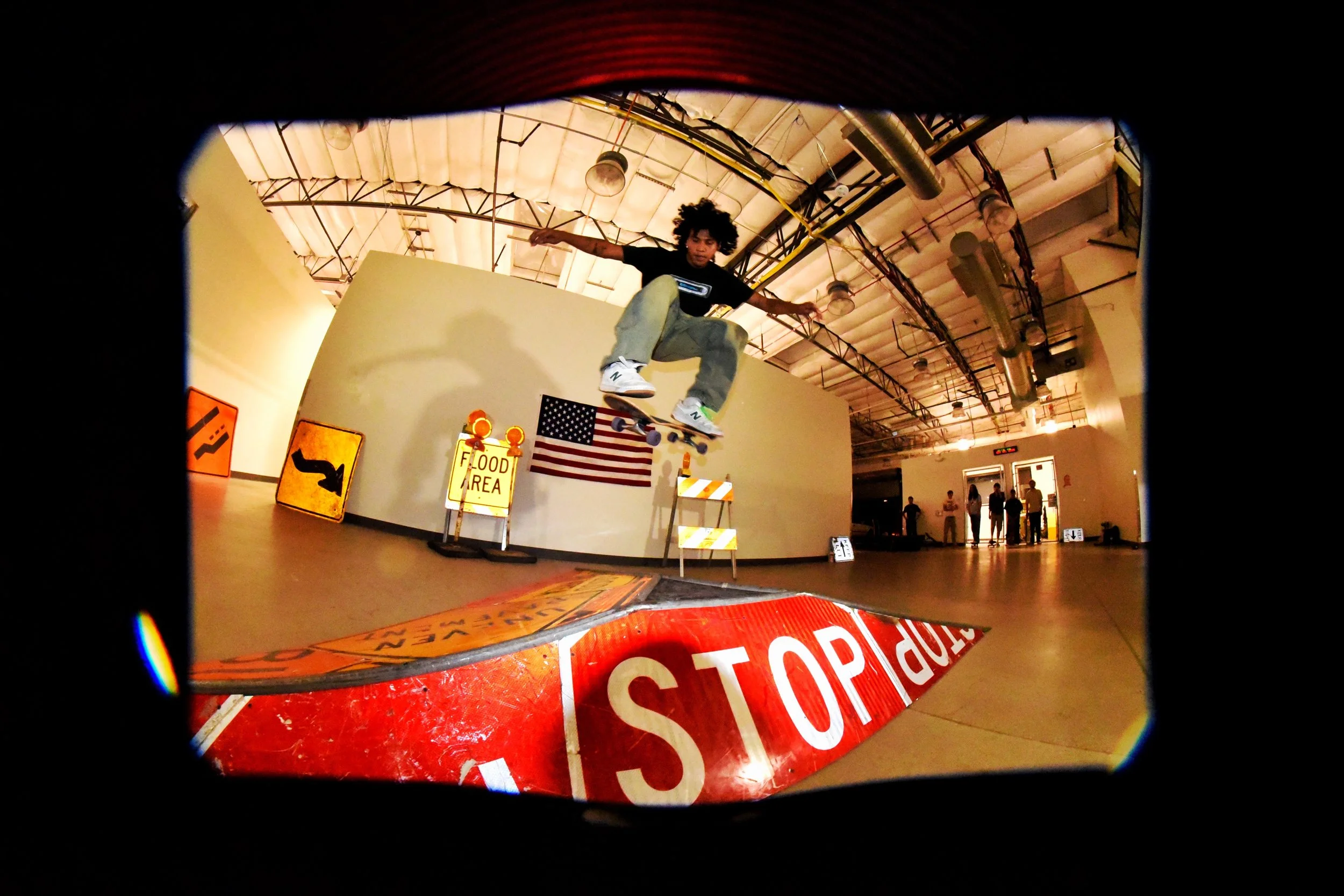
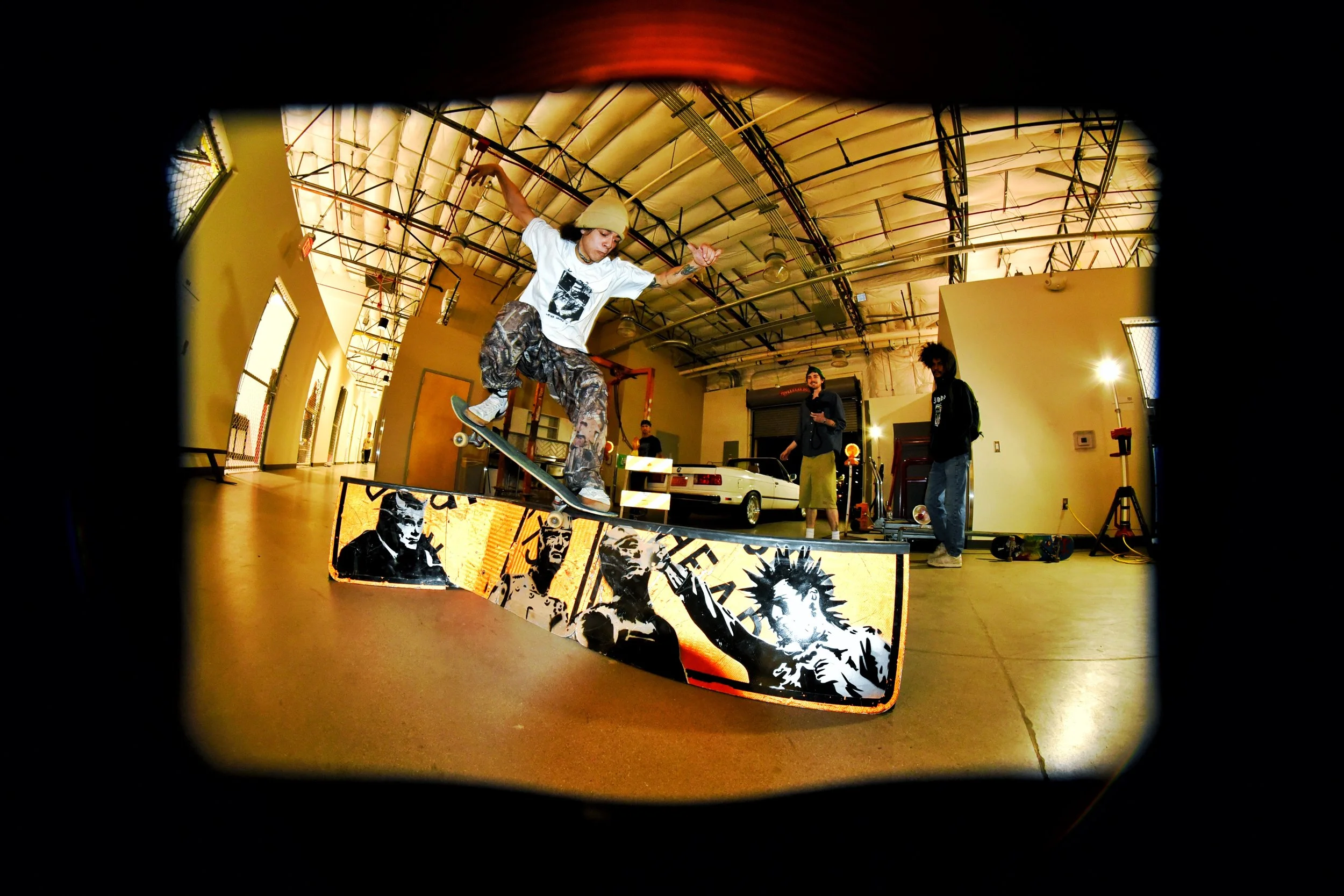
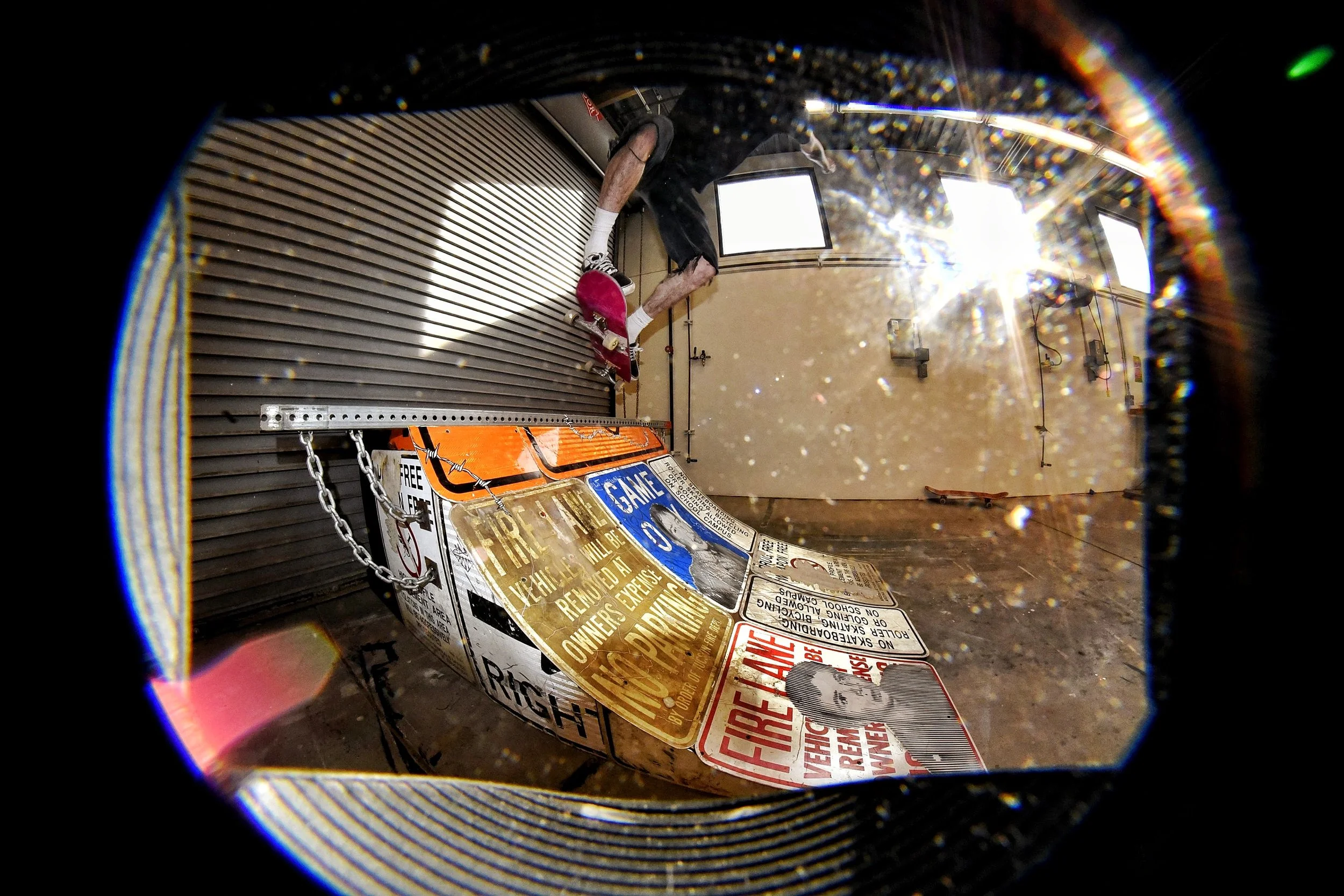
Each sculpture also includes an electronic element that relates to surveillance, documentation, and digital mediation. The rail contains embedded cameras that record live video feeds of both skaters and viewers, echoing systems used to monitor public and private space. The pyramid holds a video feed trapped within mirrored surfaces, showing footage from a test event in which skaters were invited into the gallery to experiment with the work. The quarter pipe contains televisions beneath its rear platform that use LiDAR and digital imaging to capture data clouds and generate 3D scans of people moving through the space. Together, these elements introduce another layer to the project: the body is not only performing in space, but also being watched, recorded, and translated into data.
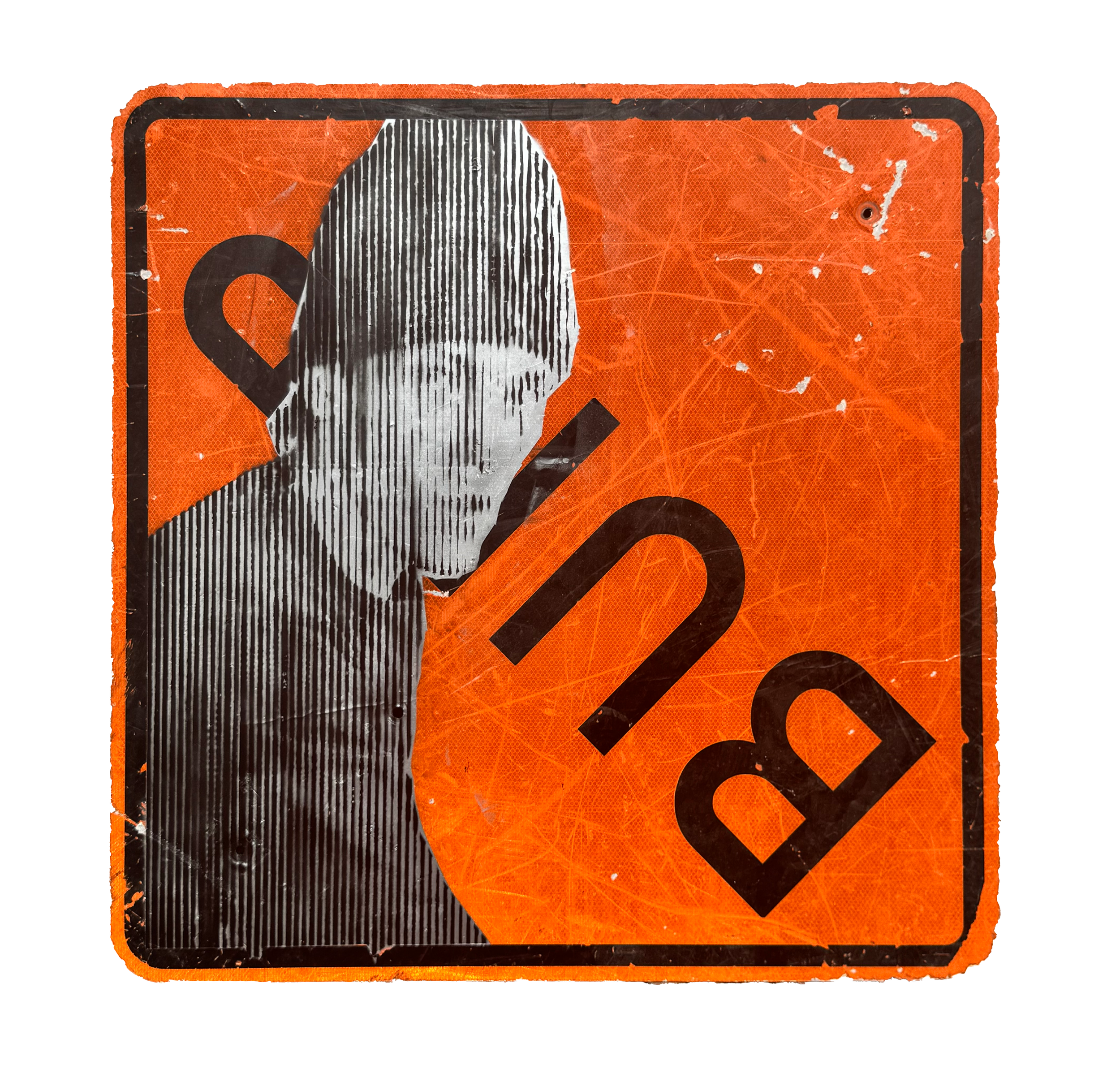
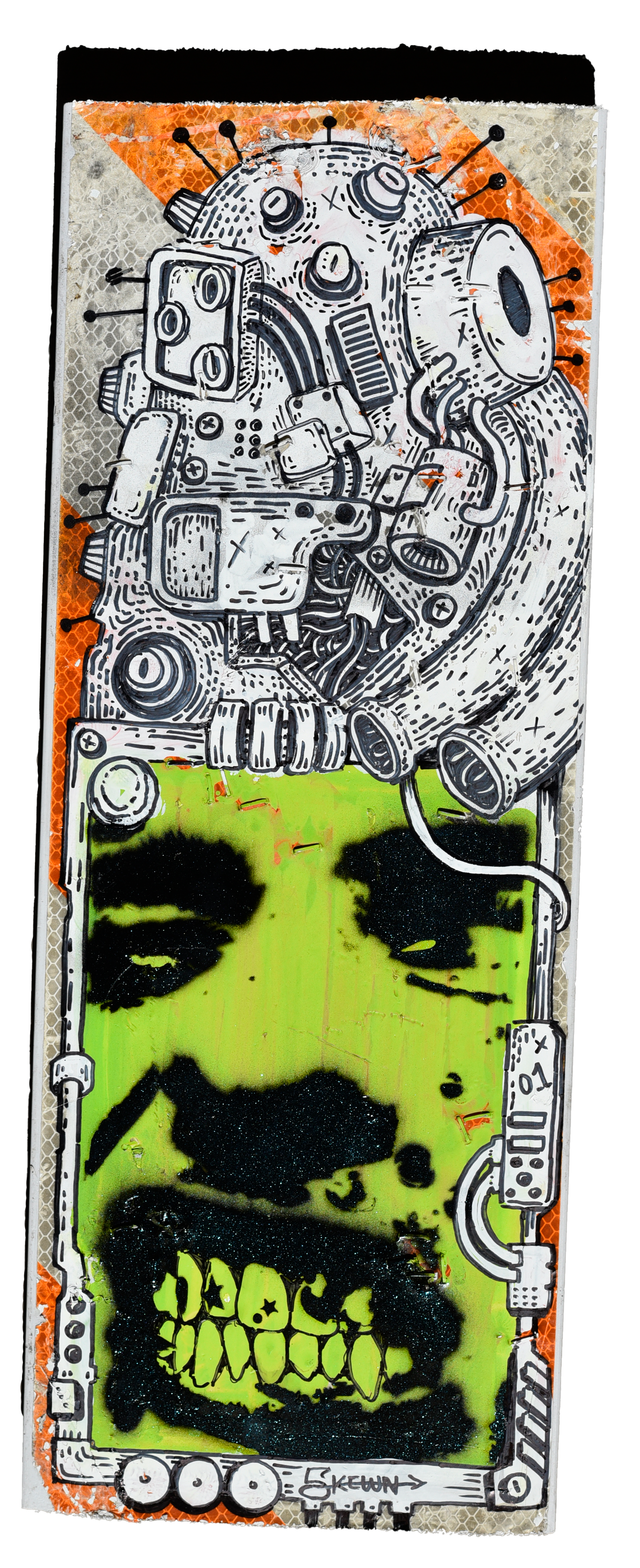
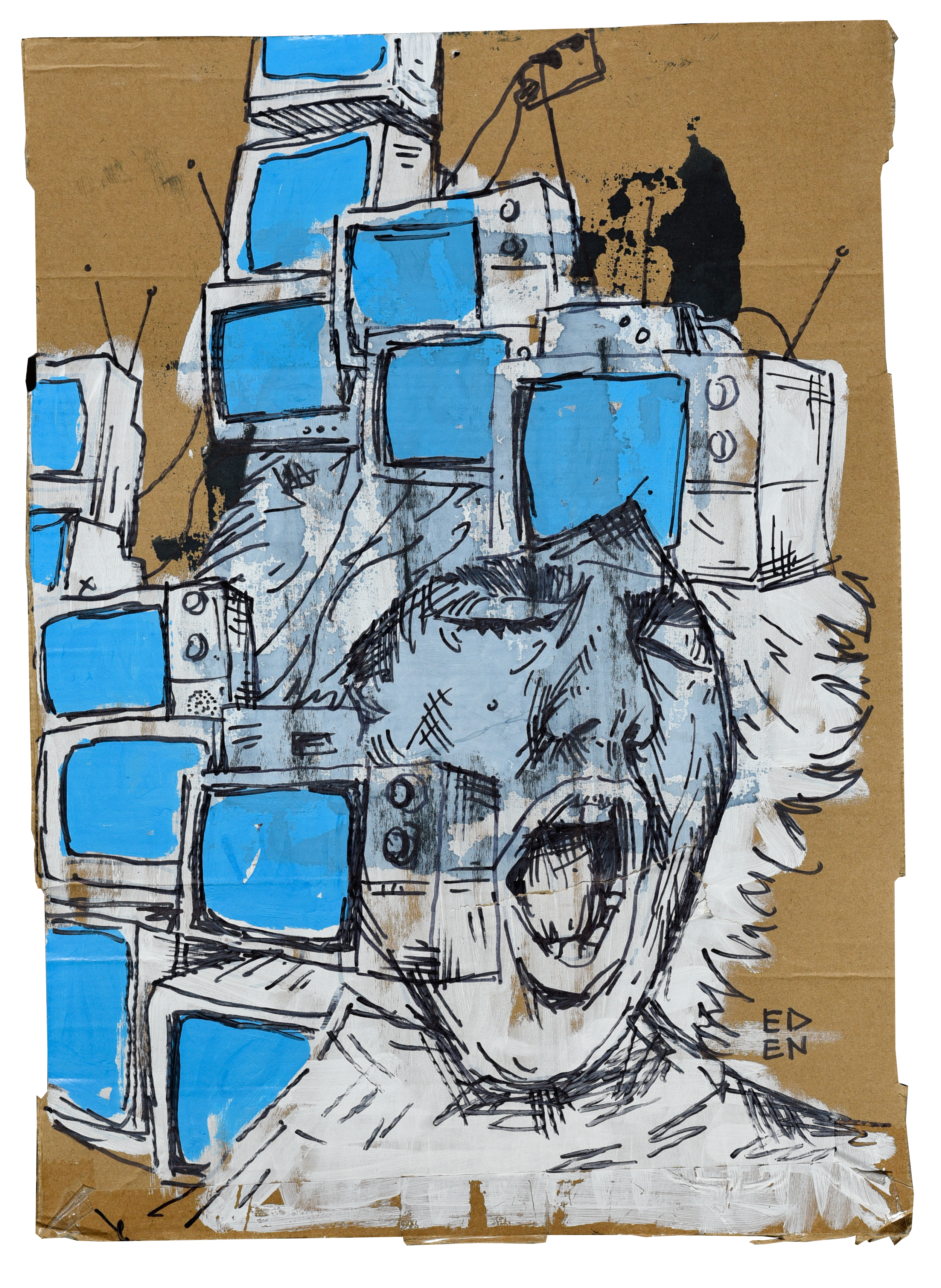
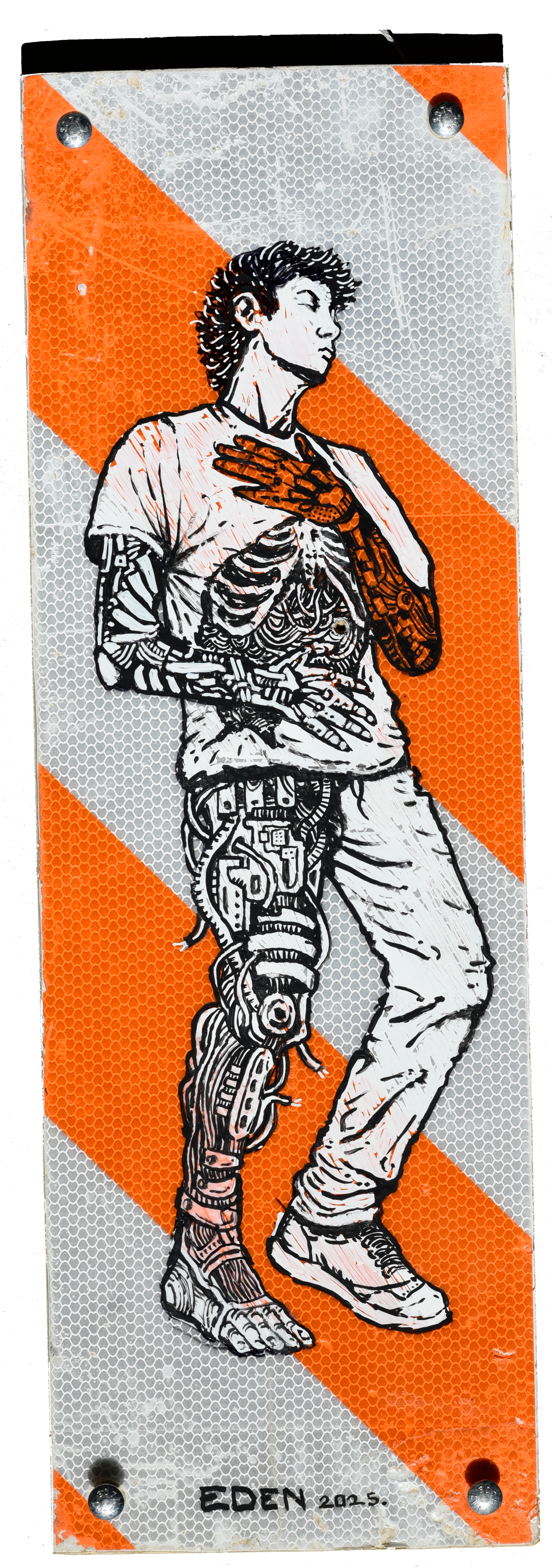
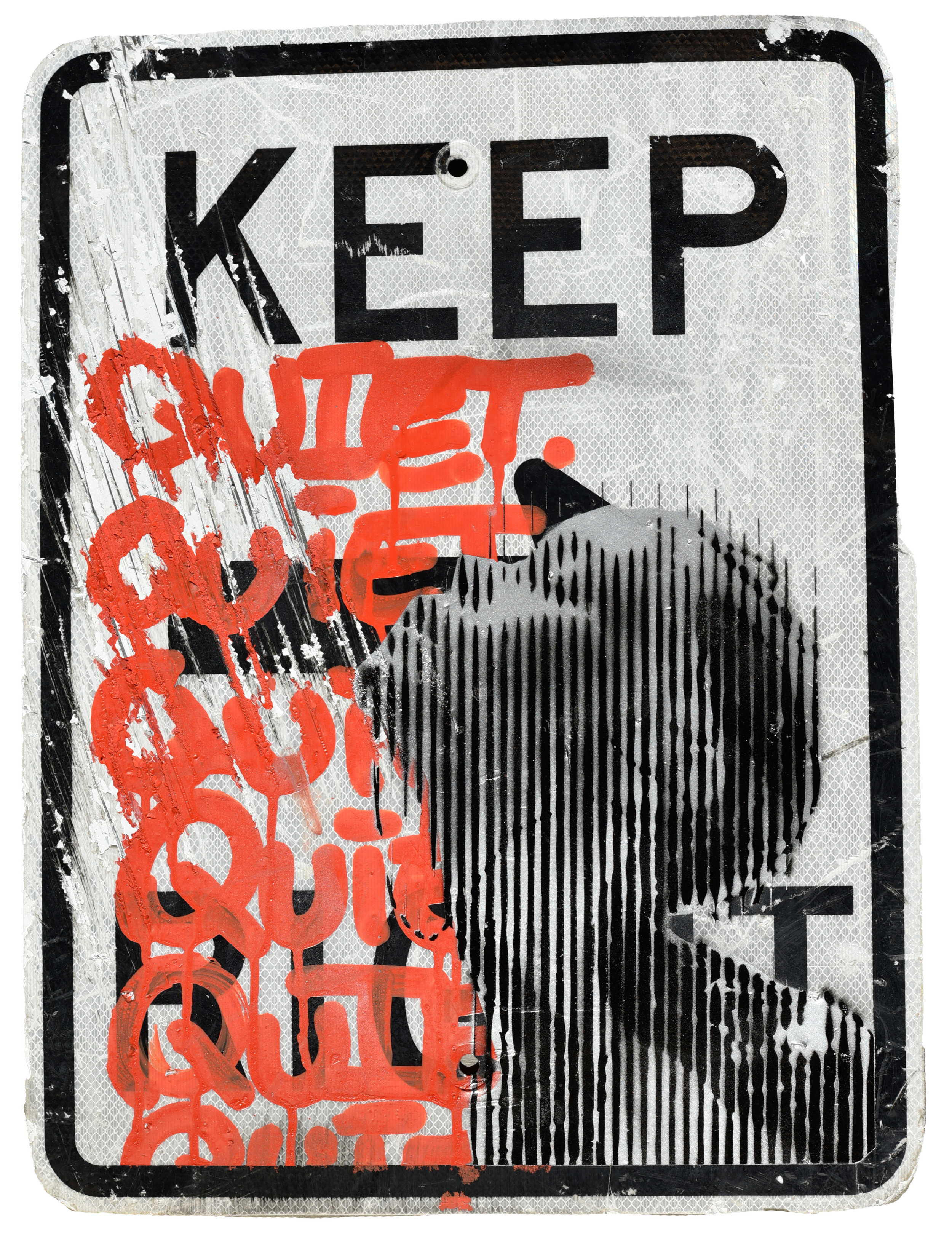
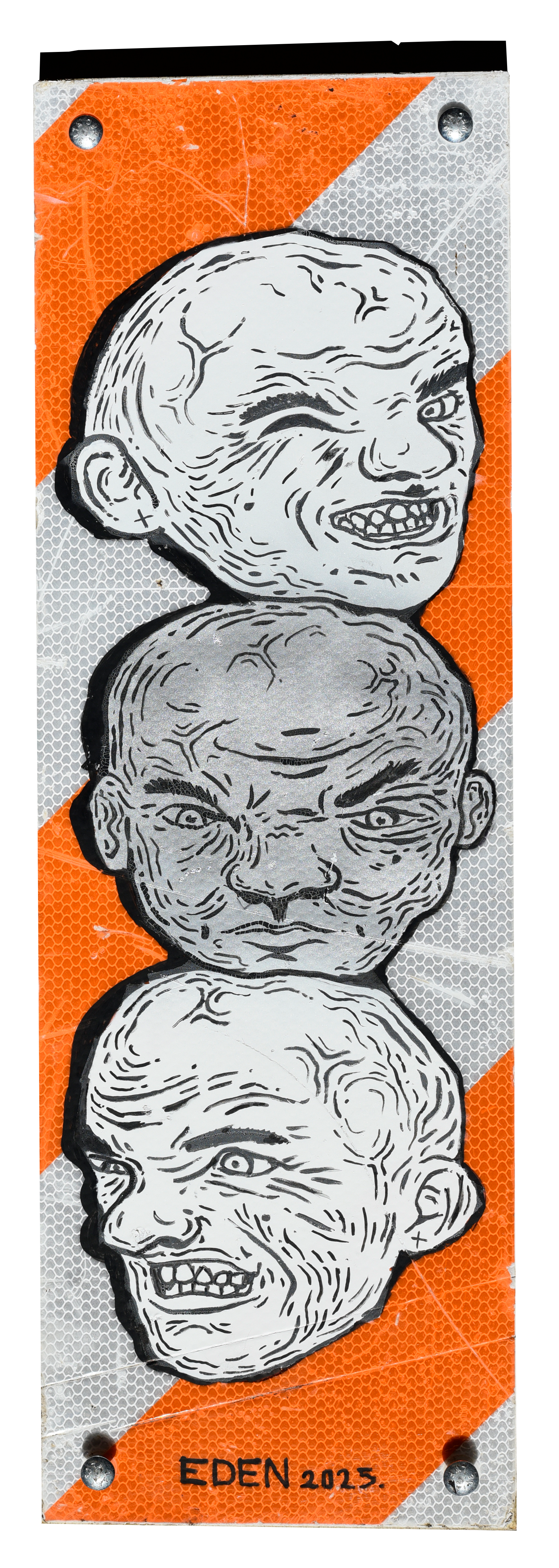
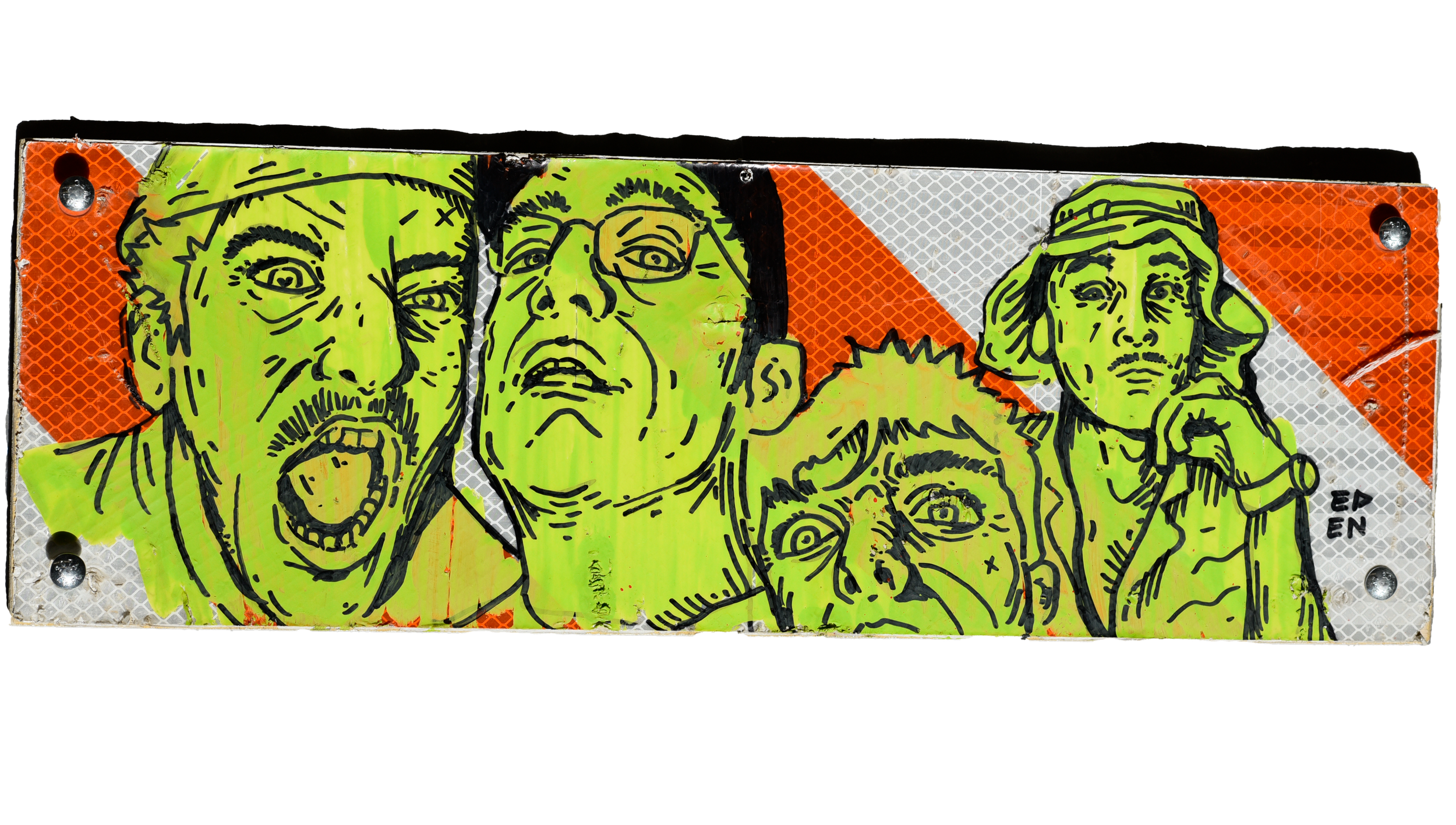
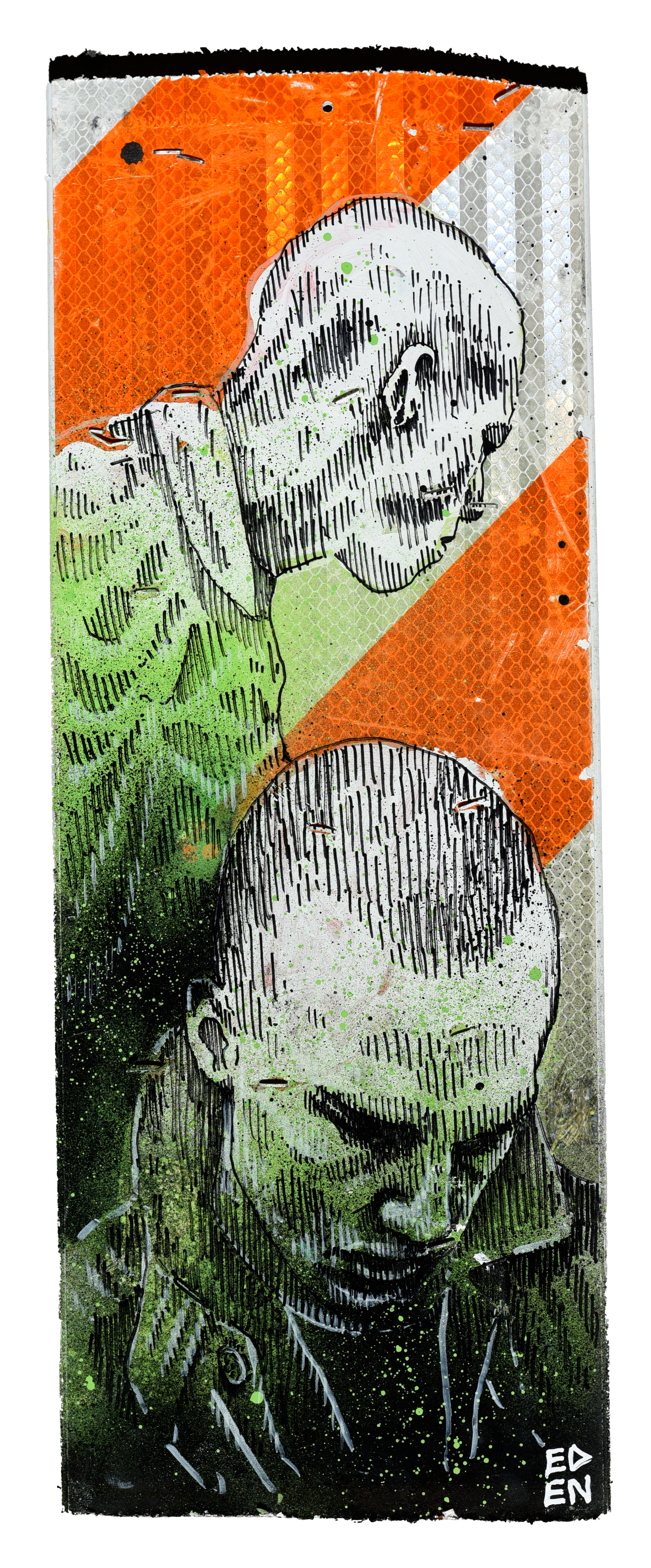
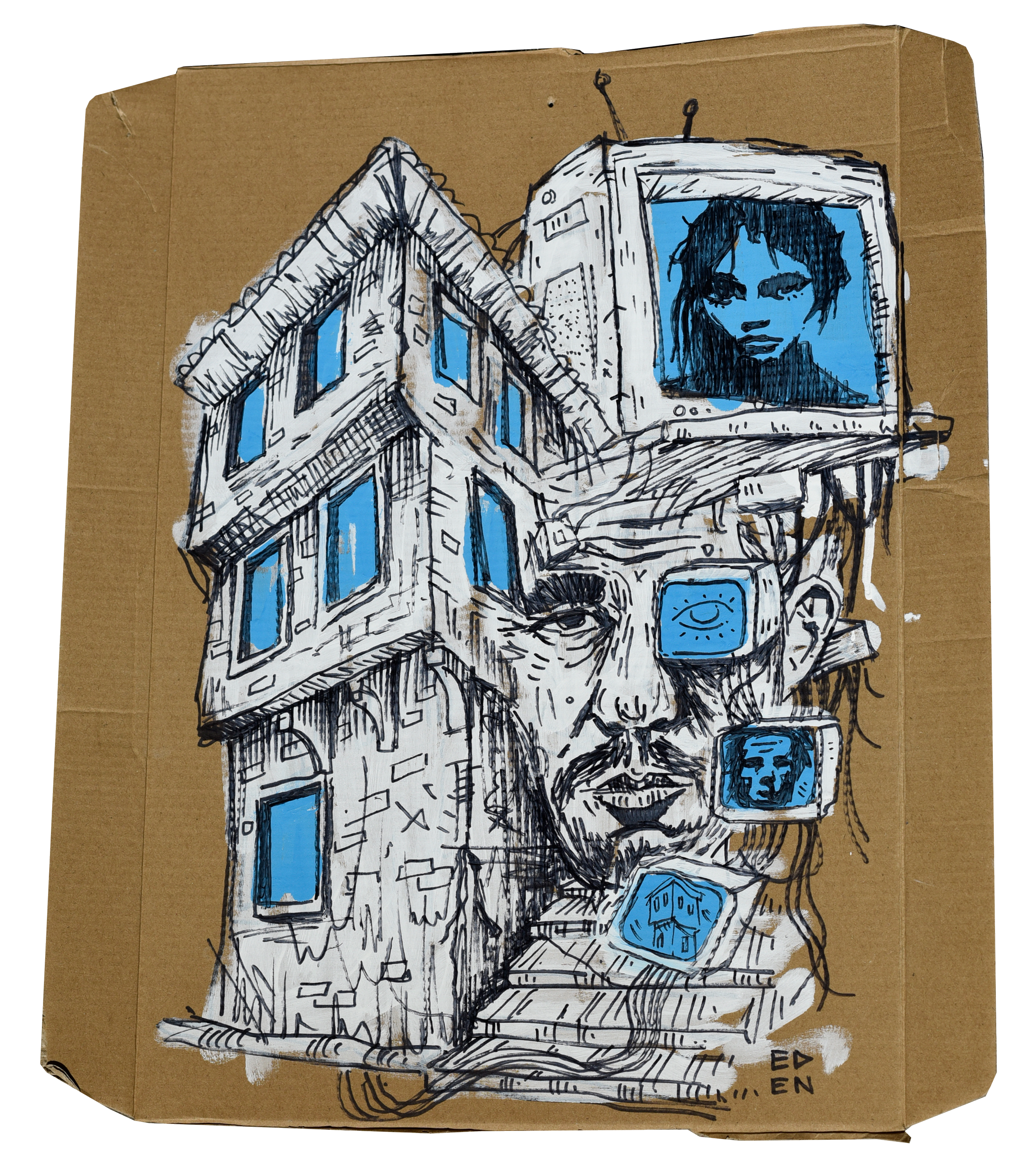
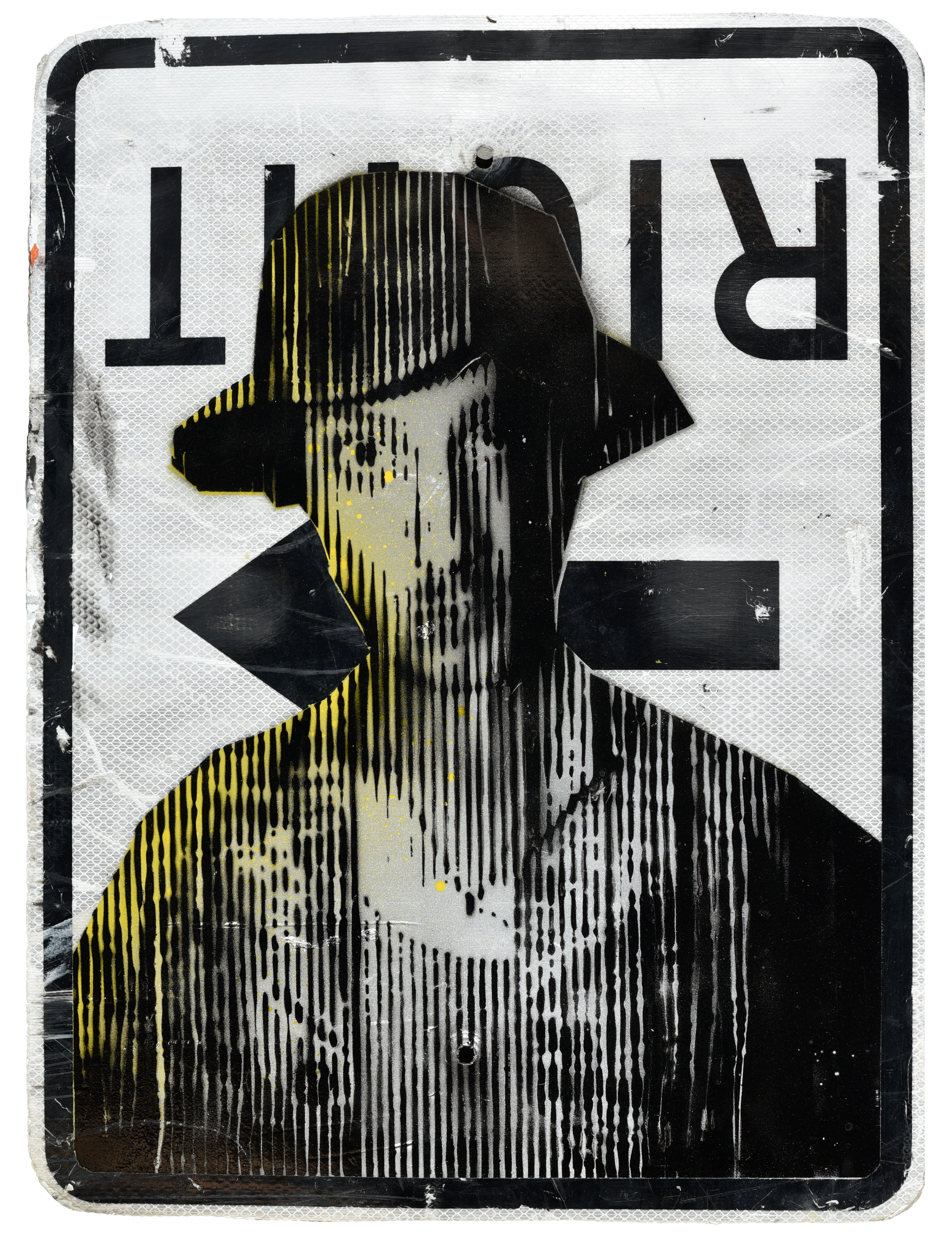
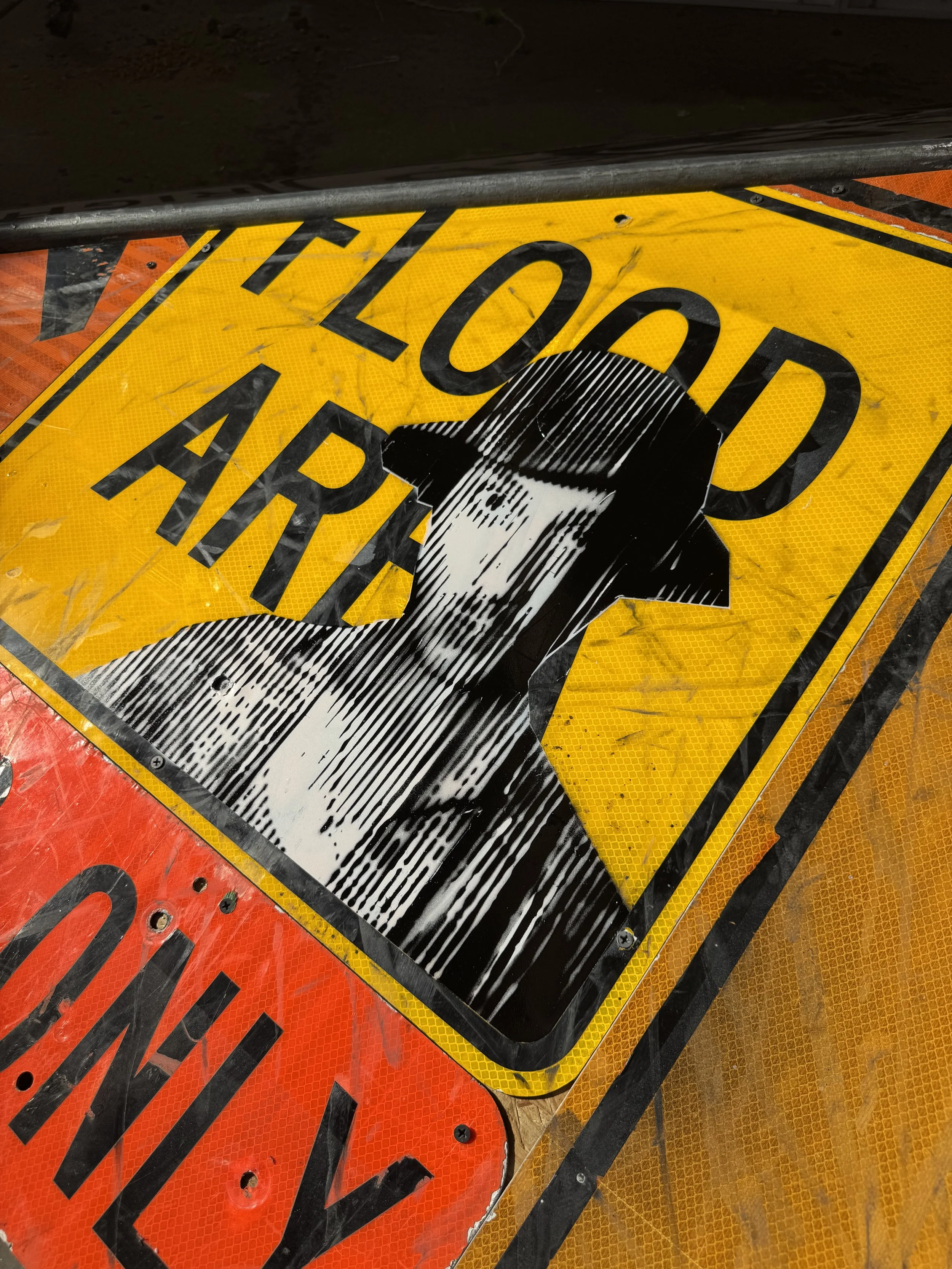
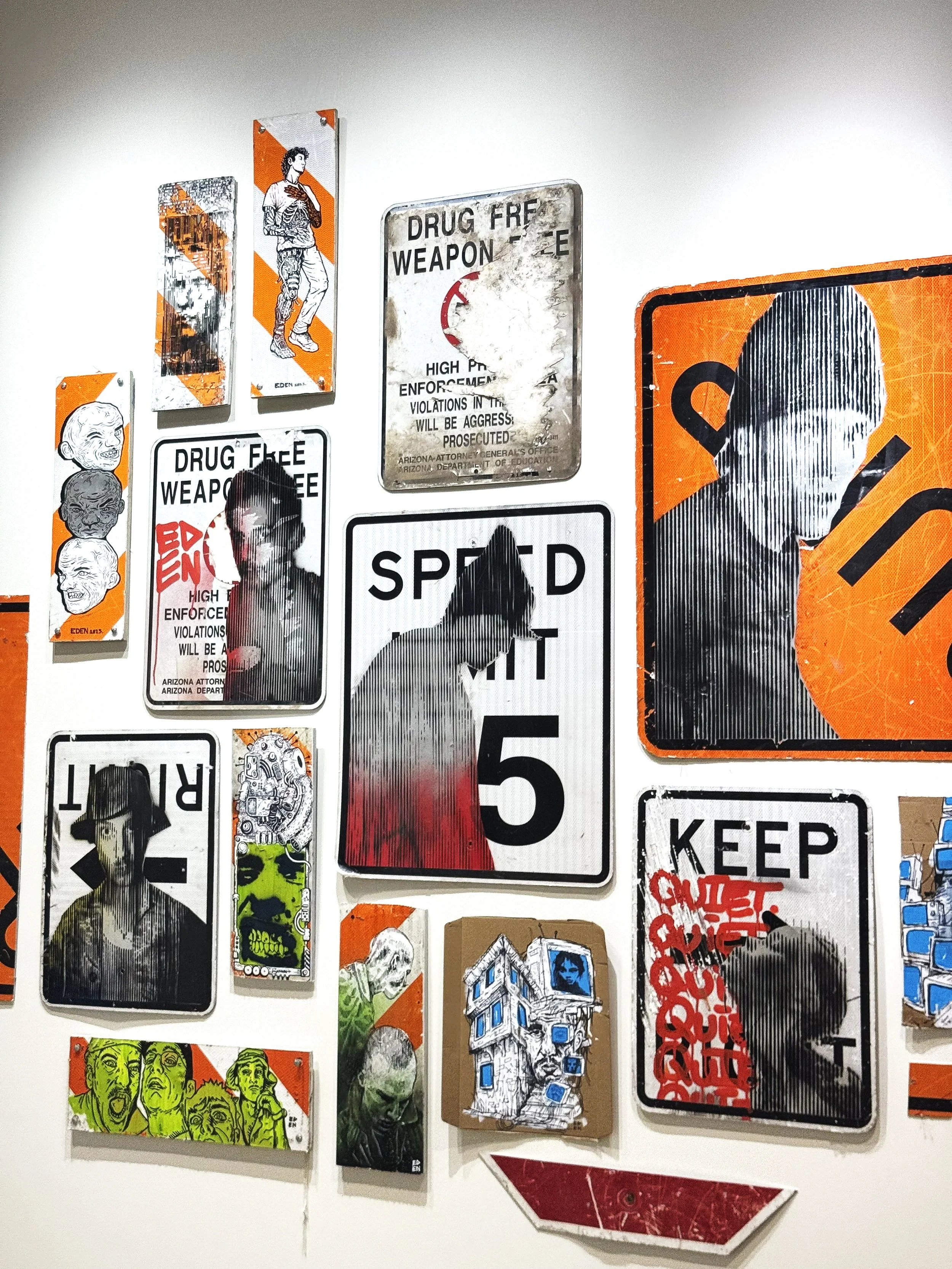
The painted figures on the ramps and rails and signs+ are built from painted halftone lines and harsh black and white shapes that resemble barcodes and printed graphics, turning the body into something caught between person, image, and digital trace. I want them to feel partially unrecognizable—scanned, circulated, and abstracted—while still remaining tactile, handmade, and vulnerable through paint. The work reflects on the commodification of images, bodies, and culture, while thinking about skateboarding as something that resists being fully fixed or owned. As the ramps are skated, the painted figures slowly wear away, allowing motion, friction, and time to erode the image and become part of the work itself.